IRVINE LAB

University of Chicago

Many phenomena in nature, from complex flows to the ways materials self-assemble and break, are underpinned by elegant geometric and topological mechanisms. A focus of our research, that spans soft condensed matter, optics and topological fluid mechanics is to seek and unravel the presence of these powerful interpretative keys.

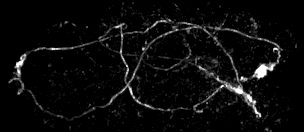
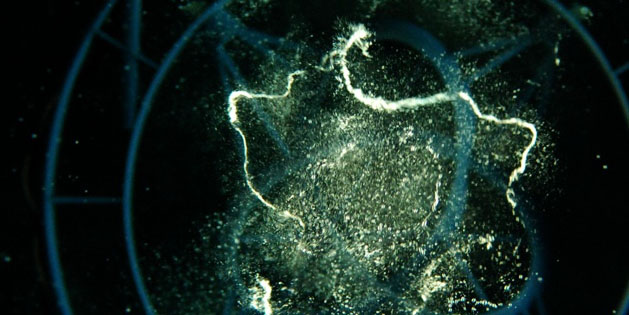
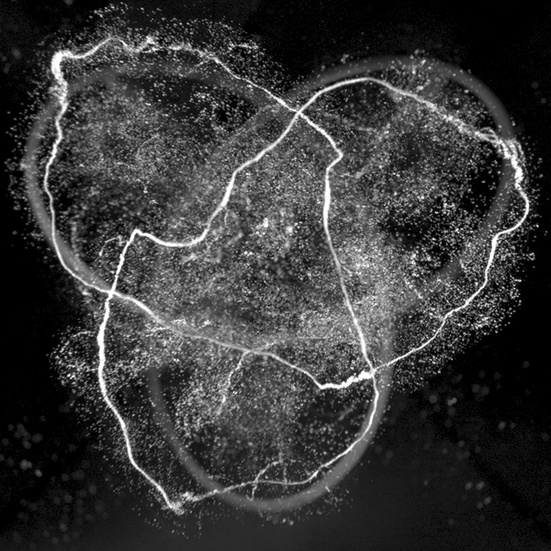
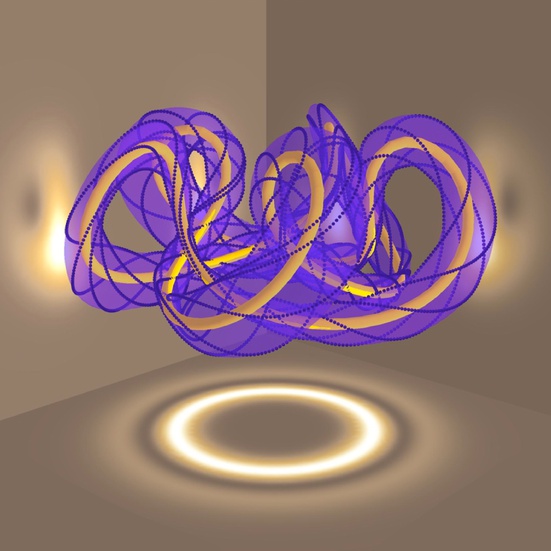
One example is the experimental and theoretical study of "knotted fields". The possibility of localized knottedness in a space-filling field has fascinated physicists and mathematicians ever since Kelvin's 'vortex atom' hypothesis, in which the atoms of the periodic table were hypothesized to correspond to closed vortex loops of different knot types. Knotted vortices, or tangles of magnetic field lines, have re-emerged in modern interpretations of plasma and both classical and superfluid complex flows. We seek to understand the physics and broader role of these fascinating excitations through experiments on knotted and shaped vortices in water, and studies of the the mathematical structure of knots in fields.

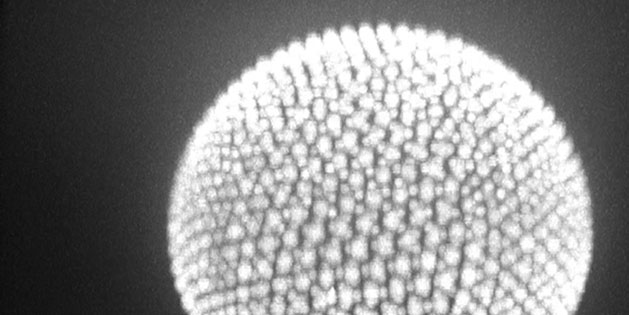
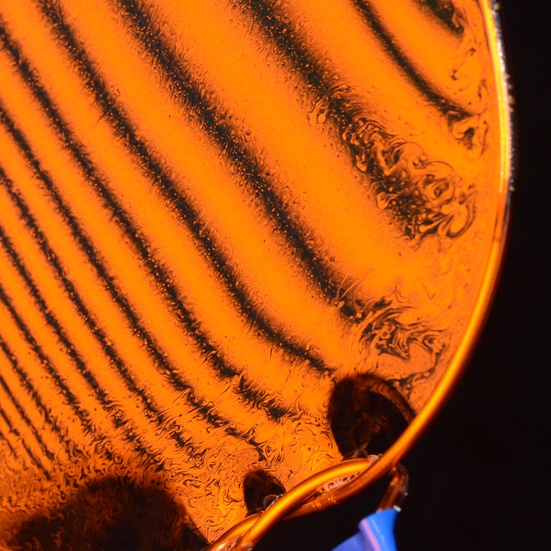
Many more examples are provided by the use of "Soft" systems to probe open questions in equilibrium and non-equilibrium many-body physics and nonlinear phenomena. "Soft" is used to describe a rich variety of classical many-body and material systems that have energetics accessible at room temperature and can be imaged. Our experiments are based on micron sized colloids, (imaged in our microscopes), elastic sheets, foams and gels. We use them to study phenomena from self-assembly to shocks and fracture.

We are located in the basement of the James Franck Institute in Chicago.

Creative Commons License